
Whether you’ve found an orphaned, ill or injured animal or are looking for solutions for a wildlife conflict, check out our answers to frequently asked questions below—or contact us at (216) 232-3270!
Wildlife FAQs
-
If you can safely capture the animal, place it in a closed, escape-proof box with air holes with no food or water. Keep the animal in a quiet, dark location away from people and pets until it can be transported to a wildlife rehabilitator. Call or text HWC at 216-232-3270 to arrange next steps.
Why shouldn’t you offer food or water? Offering these can harm—or even kill—the animal or interfere with medical diagnostics. Imagine if a person was hit by a car. You wouldn’t offer them food; you’d get them to the hospital!
-
No! Eastern cottontail rabbits commonly make their nests in open spaces such as yards. The mother knows where the nest is, but if you move it, she will be unable to find it as the babies do not have a scent. Leave the nest where it is and don’t tamper with it.
Have a dog you’re worried will hurt the nest? Dog-proof the nest by putting an upside-down laundry basket or wire dog crate with the tray removed over it. This will protect the nest from dogs, while mom can go underneath to tend to her babies. For more information on dog-proofing a bunny nest or cottontails in general, click here or check out our flow chart of how to tell if a bunny needs help.
-
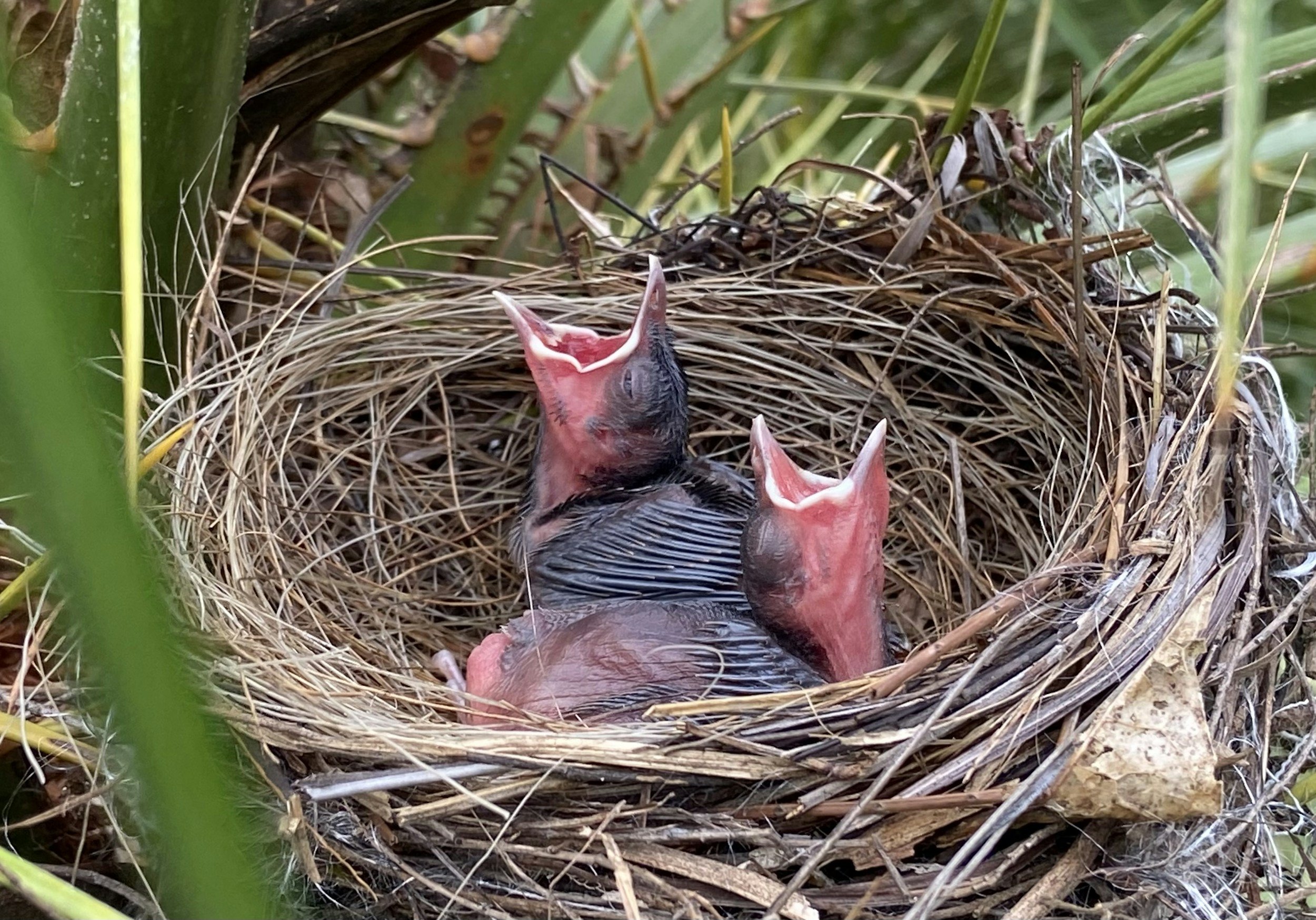
It depends on its age! If the baby bird doesn’t have feathers or has downy feathers that look like cotton, the bird should be returned to the nest or placed in an artificial nest. Click here to learn how to build an artificial nest.
If the baby bird has feathers but is unable to fly, it might be a fledgling and should be left alone, as fledglings leave the nest before they can fly to learn critical survival skills—this is normal bird behavior. Call or text HWC at (216) 232-3270 with any questions about fledglings or renesting baby birds.
-
Window strikes are a huge problem for birds, particularly during migration season. If a bird hits your window, it needs to be brought in for medical care—even if it appears alert.
Head trauma may not be immediately obvious as it takes time for the brain to swell. The bird may look fine, and then die of brain swelling/concussion an hour later. If a bird strikes your window, it’s time to intervene! Put it in a small box with a lid with no food or water and contact HWC at (216) 232-3270.
-
Like cottontails, white-tailed deer mothers leave their babies alone for much of the day to avoid attracting predators to their location. It is normal behavior for a fawn to be quietly laying by itself. Leave the fawn alone, keep pets and children away, and do not give it food or water. Do not move the fawn. Mom knows where she left her baby and will come back at dusk and dawn to feed and groom the baby.
If the fawn is wandering around alone and crying, or approaching people, this may be a sign it needs assistance. Call HWC at (216) 232-2370 with any questions or go here for more information on fawns.
-
Contact a wildlife rehabilitator! If a cat or dog had an animal in its mouth, it should always be brought in for rehabilitation, even if there aren’t obvious injuries. Cat mouths in particular are full of dangerous bacteria that can cause life-threatening infections if untreated.
You may not be able to see punctures from claws or teeth as they don’t always bleed, but that doesn’t mean they aren’t there—or that there aren’t internal injuries. Put the animal in a closed box in a dark, quiet place and call HWC at (216) 232-3270 to discuss the situation.
-
Animals are attracted to food sources, so if there is food in your yard, they will come! If you eliminate what makes your yard appealing, the animals will usually leave.
Avoid feeding outdoor cats, secure trash cans tightly and remove bird feeders to eliminate food sources for unwanted wildlife. There are also many resources for humanely evicting wildlife residents; check out some easy tips here or call HWC at (216) 232-3270 for more information.
-
While raccoons are typically active at night, any nocturnal animal can be found out during the day. Raccoons can be particularly active during daylight when they have babies. The mom will leave the babies in a safe place for the day and leave to find food. This is normal behavior and does not indicate illness.
If a raccoon is approaching people, showing little sign of fear, or is behaving or moving erratically, it may be ill or injured. Do not attempt to touch or contain the animal and contact HWC at (216) 232-3270 or your local animal control officer for more information on how to proceed.
Still have questions?
Our wildlife specialists are always happy to help!